

[ad_1]
Get Free US Employment Updates

we will send you one myFT Daily Digest Latest Email Rounding american jobs News every morning.
Investors pushed the yield on the two-year Treasury note to their highest since 2007 and dumped stocks after unexpectedly strong US jobs data fueled fears that the Federal Reserve might be forced to raise interest rates. Will be forced to
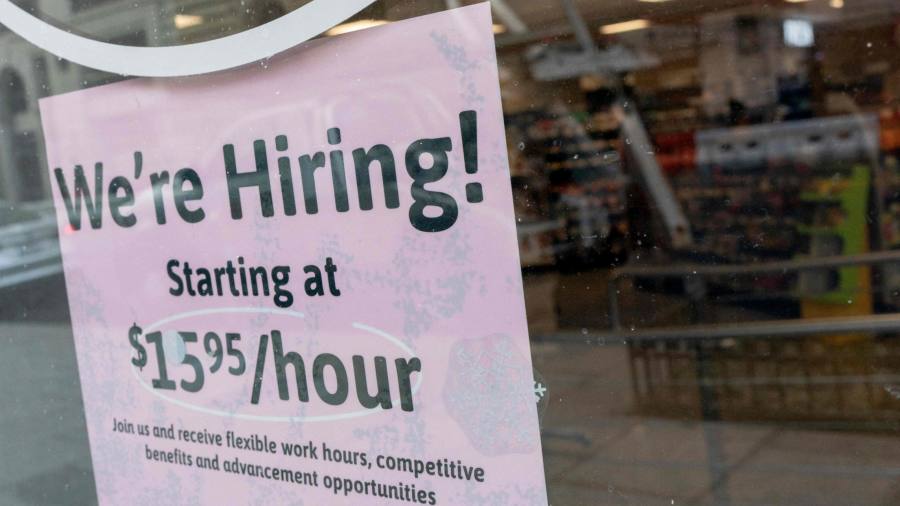
Private sector employment increased by 497,000 last month, according to ADP data, up from an increase of 267,000 in May and the biggest jump in more than a year. This figure was almost double the estimate of Bloomberg economists. There were big gains in the hospitality and leisure sectors, as well as in construction and transportation.
Yields on US Treasury bonds rose after the data release. The two-year Treasury yield, which moves in tandem with interest rate expectations, surged to its highest level since 2007, breaching the key 5 per cent mark.
The benchmark 10-year yield surged to its highest level since March, breaching the 4 per cent mark. Bond yields move inversely to price.
The rise in yields underscored the consensus that the Fed would resume raising rates in July after pausing its tightening campaign in June for the first time in more than a year.
Both major indices opened with losses on Wall Street. The benchmark S&P 500 and the tech-heavy Nasdaq were both down 1 per cent in early trade.
The US labor market remains exceptionally strong, even as the Fed raised interest rates to more than 5 percent in its aggressive drive to tame inflation. Higher wages usually make inflation worse.
“It was a very strong placement data. The softening in some wages data was encouraging for the Fed, but nothing here that would make them hesitate to hike at the end of the month,” said Ben Jeffery, US rate strategist at BMO Capital Markets.
The data came ahead of the government’s own jobs number on Friday, which is expected to show hiring slowed in the latest month. The Labor Department reports the US added 200,000 jobs in June, down from 339,000 in May, according to economists surveyed by Bloomberg.
Economists cautioned that the ADP data is not a very good harbinger of government data to come.
“Some months it’s stronger than government payroll data, sometimes it’s much weaker,” said Eric Winograd, fixed-income economist at AllianceBernstein. “The ADP makes noise and doesn’t necessarily say what will happen in the government’s jobs report.”
“I don’t think the market should be overreacting to this number. “That number alone doesn’t change my fundamental point of view,” Winograd said.
Additional reporting by Mary McDougall in London